The Story of Macallan: The Legend of the Golden Casks and the Spirit of Speyside
A journey that began with a licence signed by Alexander Reid in 1824; a sherry cask obsession, the stone walls of Easter Elchies, and record-breaking auctions. Macallan is not merely a whisky — it is a philosophy maturing within time itself.
Everything That Began with a Signature
Some stories, when you look back on them, seem inevitable. As if the outcome were already settled before that very first step was taken. The story of Macallan gives me that feeling. 1824. Scotland is still wrestling with illicit distilling, and the English parliament is attempting to draw this shadow economy into the light through new legislation. And it is in that very year, in a remote corner of Speyside, that a barley farmer by the name of Alexander Reid obtains one of Scotland's first official licences.
What he was thinking as he signed that document, I cannot say. But the weight of that moment — not its historical weight, but its human weight — is something I feel each time I hold a glass of Macallan. That rush of dried fruit, orange peel and sweet spice on the palate is, in truth, the echo of a decision made two hundred years ago.
Easter Elchies: Stone Walls and a Quiet Pride
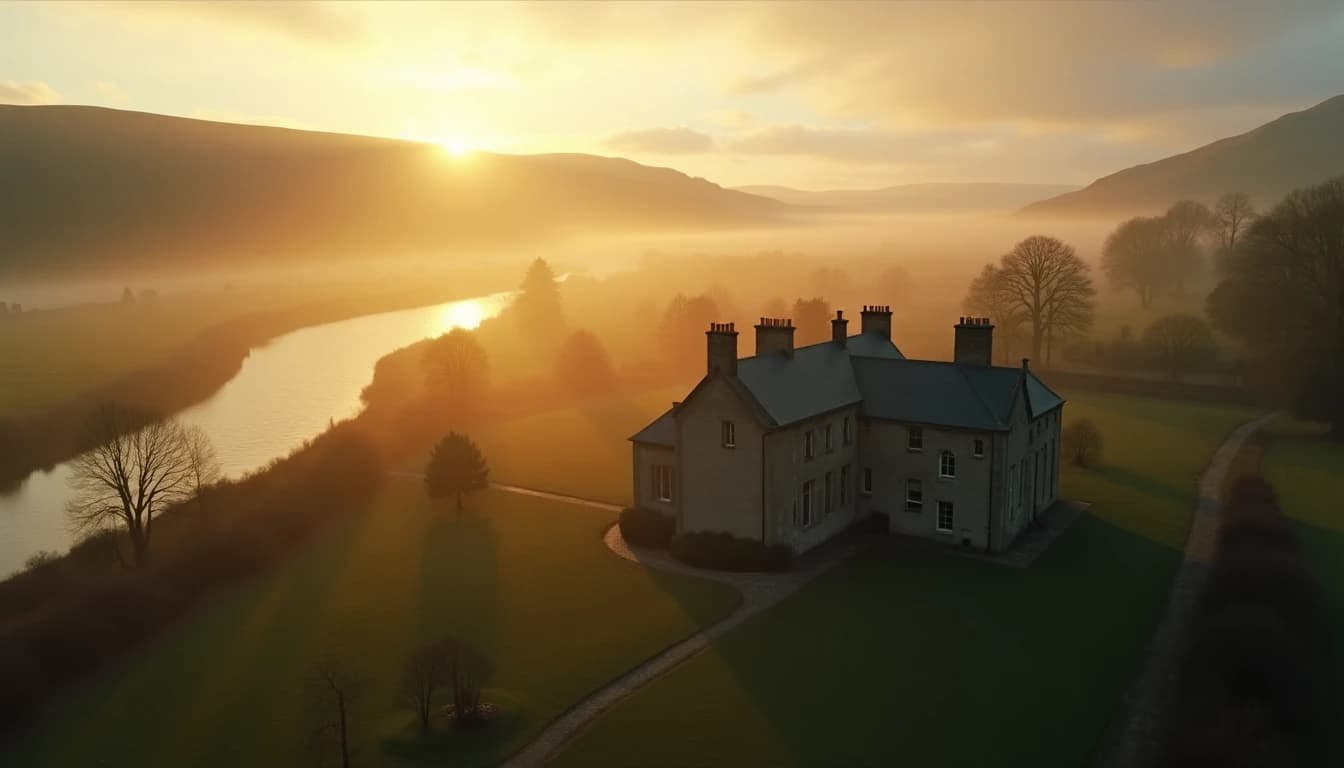
To understand Macallan, one must first understand that house. Easter Elchies — a Scottish manor built of granite stone, dating back to the early 1700s, looking out over the River Spey. The distillery grew up around it, not the other way around. This building, still standing today, is a tangible expression of Macallan's identity; it reflects that heavy, silent confidence carried by everything with deep roots.
The first time I saw a photograph of it — on a yellowed postcard, shrouded in the mist of a damp Scottish morning — something settled into place inside me. There are certain places that seem to have absorbed their history into their very stones. Easter Elchies is such a place. And I realised: the gravitas in Macallan's character, that refusal to be hurried, most likely comes from this very land.
Speyside is Scotland's most prolific whisky region. Glenfiddich is here, Aberlour is here, Glenlivet is here. But Macallan's position within Speyside has always felt slightly apart — not geographically, but spiritually. As though it speaks a different language within the same borders.
The Sherry Cask: An Anatomy of Obsession
What sets Macallan apart from its rivals? Not the barley. Not the water. Not even the distillation method, entirely. The true answer lies in those casks down in the warehouse.
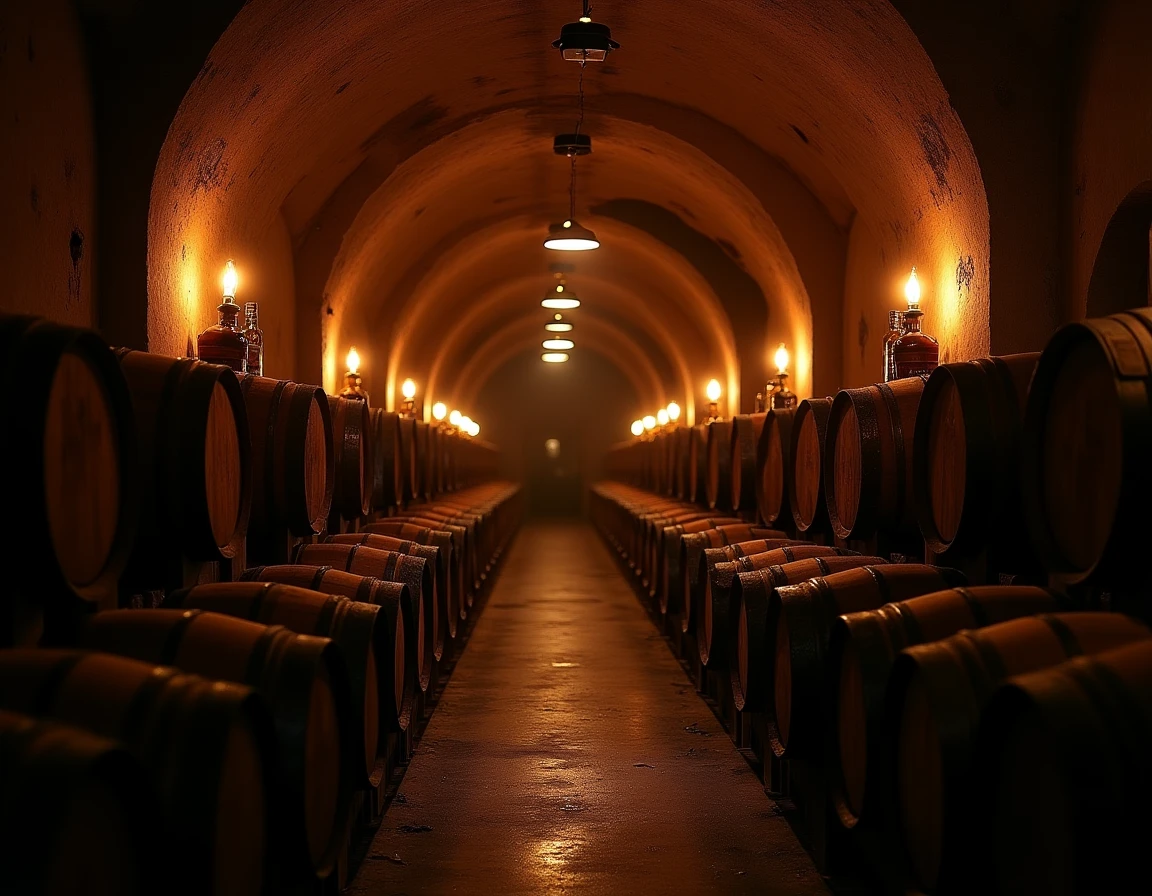
For decades, Macallan elevated the use of sherry casks to something approaching an article of faith. Oak casks sourced from Spain's Jerez region — from the warm soils of Andalusia in particular. These casks first carry oloroso or Pedro Ximénez sherry for years on end; then they make their way to Scotland and receive Macallan's freshly distilled new make spirit. From that moment, time takes over.
The sugar, fruit and spice character that the sherry has worked into the wood seeps into the whisky over the years. This is why Macallan's classic expressions carry that deep golden colour — entirely natural, entirely from the cask. This is why those notes of dried fruit, fig, cocoa and cinnamon are there. The cask here is not a vessel; it is a creative partner.
"Without the quality of the cask, time means nothing. Twelve years in poor wood may be worth less than two years in a perfect cask." — When one of Macallan's former production directors said this, it reminded me of a simple truth: it is not the patience itself that matters, but where you choose to wait.
Macallan took this conviction so far that it established its own private cask programme. It selects oak trees in Spain, commissions the casks to be made, and enters into long-term agreements with sherry producers. The process is staggeringly complex in terms of cost — but the result is that consistency which strikes the palate with such assurance.
The Collector's Holy Grail: Macallan in the Auction Rooms
At a certain point, Macallan ceased to be merely a whisky and became an asset class. I do not use that phrase lightly. Christie's, Sotheby's, Bonhams — in these rooms, bottles of Macallan routinely reach figures that rival works of art.
At an auction held in Hong Kong in 2018, a bottle from the year 1926 surpassed the 1.2 million dollar mark. It had rested in the cask for sixty years, then been bottled; it had sat quietly in a collector's cellar for more than forty years after that. Even before its seal was broken, the value it had accrued was far beyond anything any distillery could have dared to imagine.
But the culture of collecting is not defined solely by these extreme examples. Macallan's various series — The Fine & Rare, The Lalique, Masters of Photography, Anecdotes of Ages — each tells its own story. Limited production volumes, long maturation periods and the distinctive character shaped by the sherry cask make these series compelling for collectors both aesthetically and historically. Each bottle represents not merely a drink but a tangible document belonging to a specific year, a specific craftsman and a specific moment in a specific cask.
I am not part of this world of collecting — neither financially nor by temperament. My relationship with Macallan is more direct: an evening, a glass, precisely that moment. But I cannot help following these auctions, because every record-breaking sale shows how a whisky accumulates meaning over time. And this makes me wonder: the glass I am drinking right now — what will it have become, years hence, in someone else's memory?
The New Easter Elchies: A Door Opening onto the Future
In 2018, Macallan opened its new distillery building. Designed by Rogers Stirk Harbour + Partners, the structure stands alongside the old Easter Elchies House — though rather than competing with it, it was conceived in a spirit of deference towards it. A grass-roofed building, half-sunk into the earth, in dialogue with its surroundings. The first photographs of it surprised me; but the more I thought about it, the more sense it made.
Macallan did not present this as a rupture. Capacity increased, yes. Technology entered, yes. But the sherry cask philosophy did not change. That matters to me — as an observer, I am always curious about how much of its essence a brand loses when it grows, and how much it manages to preserve.
It will take years to taste a fully matured expression that has emerged from the new distillery. But I am already curious: what will those casks hold? Which year's morning, which afternoon light, will seep into that wood?
Conclusion: Time, Wood and Patience
The story of Macallan reminds me of the same thing every time: great things do not happen in haste. Two hundred years have passed since Alexander Reid — yet the soul of the distillery is still maturing in the shadow of that old stone house, inside sherry-seasoned oak casks, listening to the sound of the River Spey.
This is why a particular kind of slowing down comes over me when I drink Macallan. When I bring the glass to my nose — the vapour of dried fruit and spice hovering above that deep golden liquid — I am not simply smelling a drink. I am smelling the sum of a decision made a hundred years ago, a cask chosen with care, and years waited out with patience. And that, every single time, is a feeling large enough.
Frequently Asked Questions
- When was Macallan founded and who founded it?
- Macallan was founded in 1824 by Alexander Reid. Reid was among the first to obtain one of the distilling licences made legal under new legislation passed in Scotland at the time. The distillery was built alongside Easter Elchies House in the Speyside region.
- Why does Macallan use sherry casks?
- For decades, Macallan has embraced the sherry cask as a foundational element for both colour and aroma. Oak casks sourced from Spain's Jerez region are first seasoned with oloroso or Pedro Ximénez sherry; this process imparts the whisky's characteristic notes of dried fruit, fig and spice, as well as its deep golden colour. Macallan continues this philosophy today through its own private cask programmes.
- Why do Macallan bottles reach such high prices?
- Macallan has earned a unique position in the world of collecting. The foundation of this interest lies in its limited production, long maturation periods and the distinctive character formed through the use of sherry casks. A bottle from 1926 sold for over 1.2 million dollars in 2018 — a figure that demonstrates the extraordinary value a whisky can accrue through maturation and time.
- What is Easter Elchies House and what is its connection to Macallan?
- Easter Elchies is a historic Scottish manor dating from the early 1700s, overlooking the River Spey. The Macallan distillery grew up around this building, and Easter Elchies remains both the brand's emblem and an active structure to this day.
- When did Macallan's new distillery open?
- Macallan's new distillery building, designed by Rogers Stirk Harbour + Partners, opened in 2018. Noted for its grass roof and earth-sheltered construction, the building stands alongside the original Easter Elchies House and continues to uphold the sherry cask philosophy despite the increase in production capacity.
- In which region is Macallan produced?
- Macallan is produced in Scotland's Speyside region, near Charlestown of Aberlour, close to Craigellachie. Speyside is Scotland's most concentrated whisky region, and also home to such prestigious names as Glenfiddich, Aberlour and Glenlivet.