The Story of Laphroaig: Smoke, Peat, and the Scent of the Sea on Islay
Born in 1815 on one of Scotland's most unforgiving islands, Laphroaig embodies a character distilled from ancient peat bogs and the breath of the Atlantic. Those who love it become fanatics. Those who don't will never try it again. Those who fall somewhere between are exceedingly rare.
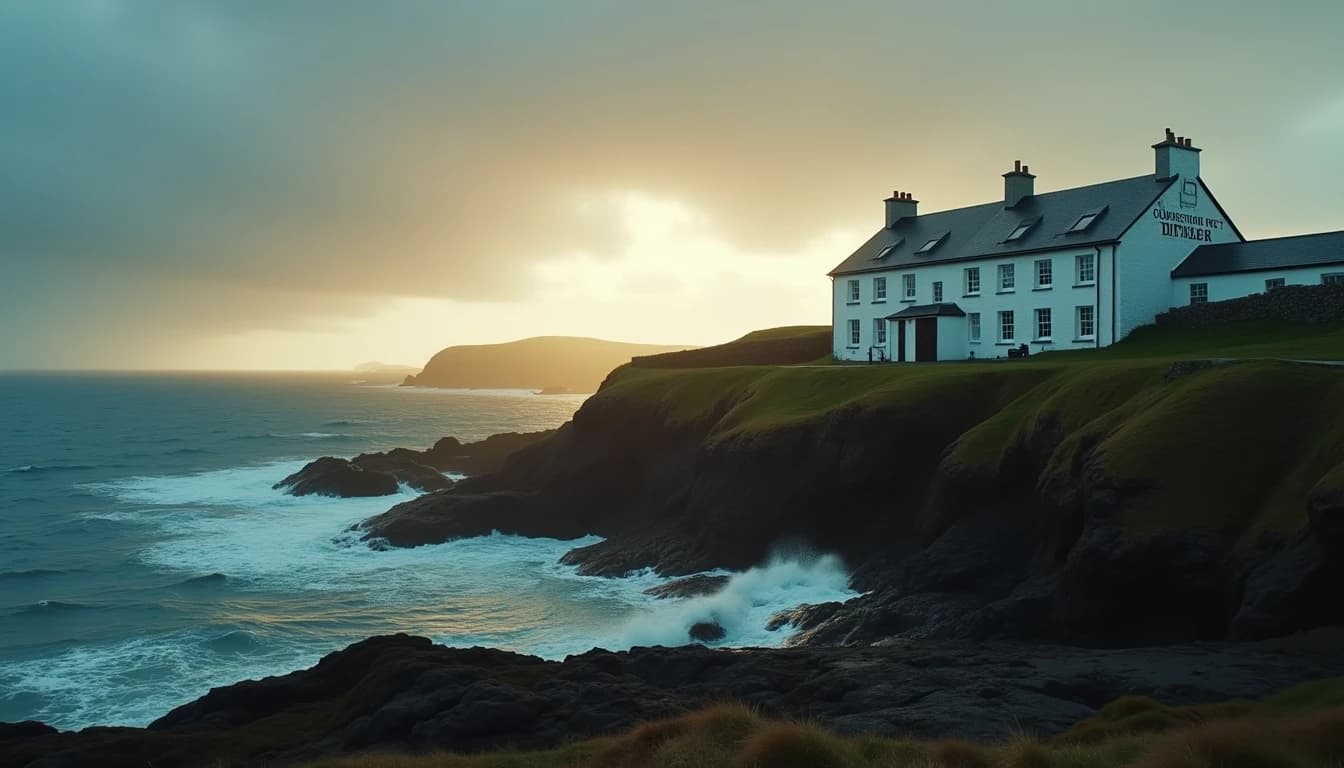
Some whiskies take over a room before they even reach the glass. Laphroaig is one of them. Even before it reaches your nostrils, you sense that something is different — as though someone has lit a fireplace in the distance, splashed salt water over it, and carried that mixture directly to you. This is not a tasting note; it is a moment of introduction. And Laphroaig rarely leaves the people it meets indifferent.
Islay: The World's Most Demanding Distilling Ground
The island of Islay, stretching along Scotland's western coast as if gazing toward Ireland, appears small on a map — yet in terms of character, it is a vast place. Atlantic storms batter the island for nearly nine months of the year. In winter, the wind cuts so sharply that even the rocks along the shore change shape over the years. And right at the heart of this harshness, a handful of distillers line the Kildalton coast — among them, perhaps the most iconic of all: Laphroaig.
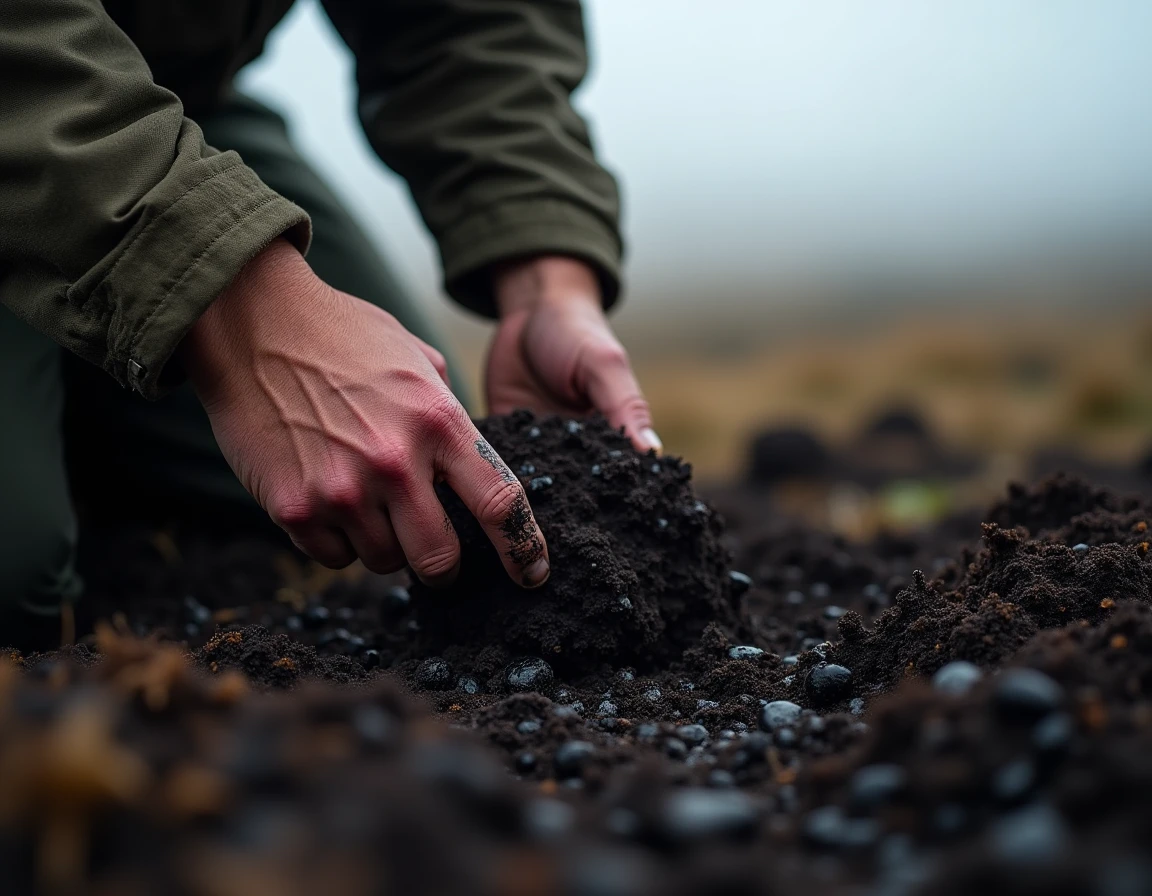
The island's geology directly defines the identity of its whisky. Islay's interior is blanketed in ancient peat bogs. This peat — a dark, saturated mass formed over thousands of years from decomposed vegetation, bog moss, and root remnants — is used to dry Laphroaig's malted barley. And it is precisely here that everything begins: smoke, salt, iodine, seaweed. All of it rises from the bog, is fed by the Atlantic, and is shaped by the distiller's hand.
1815: The Johnston Brothers and the Severity of a Beginning
According to official records, Laphroaig was founded in 1815 by Donald and Alexander Johnston — two brothers from one of Islay's native farming families. At the time, the island was a place where illicit distilling ran rampant and royal excise officers were fended off with bribes or cunning. The Johnston brothers chose to build their enterprise on legal ground. This was an act of both courage and confidence.
The family retained control for decades. But history rarely runs a straight course. Donald Johnston died in 1847 after falling into his own brewing vat — a bitter and peculiar end, yet one that seems, in hindsight, fittingly in keeping with Islay's unrelenting spirit. The distillery changed hands, expanded at times, struggled at others, but never once lost that foundational character — that smoky, salty, iodine-laden essence.
Bessie Williamson, who stepped onto the stage in the mid-twentieth century, is a name at least as important to Laphroaig as its founders. Taking the helm of the distillery at a time when female executives were extraordinarily rare in the industry, Williamson shaped not only the business but Laphroaig's international voice. She was the architect of its expansion into foreign markets, the United States foremost among them, and she laid many of the cornerstones upon which the brand's reputation rests today. Her career at the distillery stretched from the 1950s into the 1970s, and during those years, Laphroaig transformed from a small island whisky into a character of global stature.
From Peat Bog to Glass: The Anatomy of a Smoke
If you wish to understand Laphroaig, you must first understand peat. In most Scottish whiskies, barley is dried with hot air. On Islay — and at Laphroaig in particular — this process is carried out by burning peat. The smoke penetrates the barley grains; phenolic compounds spread throughout the malt. The unit of measurement is ppm (parts per million of phenolic compounds), and Laphroaig registers exceptionally high on this scale — reaching 40 to 45 ppm in some batches.
But smoke alone is not what makes Laphroaig itself. The distillery's proximity to the shore, the sea air breathed by the warehouses, the water sourced from springs filtering through the bogs — when all of this converges, that signature profile emerges: peaty, iodic, salty, yet concealing a sweetness beneath; notes of vanilla and caramel imparted by the oak cask slip through the smoke, then recede again.
Prince Charles and the Royal Warrant
There is another intriguing page in Laphroaig's story: the royal seal of approval. Prince Charles of Wales — now King Charles III — granted Laphroaig an official Royal Warrant. This distinction certifies that a product is favoured by the royal household, and it is awarded only under specific conditions, for a defined period.
Prince Charles is known to have visited the distillery in 1994 and to have wielded a peat-cutting iron himself. The photographs exist: the future king in his wellies, peat knife in hand, standing on the bog. This anecdote underscores that Laphroaig is no ordinary product — it is a matter of character, not mere preference. The Royal Warrant still appears on the bottle's label today.
Love or Loathing: No Other Option
People who speak about Laphroaig tend to divide into two camps. The first says: "I knew on the first sip — this was my whisky." The second is generally more brief: "Never again."
This polarisation is no accident. Laphroaig carries the most contested aroma in the whisky world. The iodine and medicinal notes are so pronounced that some liken it to a pharmacy corridor, while others are reminded of a campfire on the beach. The same dram, the same glass — two entirely different worlds. The first time I tasted it, I was reminded of my grandfather; an old boat, salt-cured timber, a village near the sea. I could not have said where that moment came from, but Laphroaig brought it back.
Rather than shying away from this duality, the company has embraced it. The slogan they employed for years is almost provocative: "Opinions are divided." And that honesty is, in itself, a posture worthy of respect.
Friends of Laphroaig: Owning a Plot of Bog
Laphroaig established something rather unusual for its most devoted drinkers: the Friends of Laphroaig programme. Anyone who registers becomes the tenant of a symbolic plot of land on Islay — precisely one square foot of peat. A physical certificate arrives, complete with coordinates. In theory, you can travel to that bog and stand on your very own ground; some people actually do.
It has no practical significance, of course. But its symbolic weight is considerable. Laphroaig positions you not as a consumer, but as part of the island itself. Every drop you drink deepens an imaginary yet genuine bond with that bog. The programme has millions of members around the world — a figure that speaks to the depth of community the brand has created.
Laphroaig at That Hour of the Evening
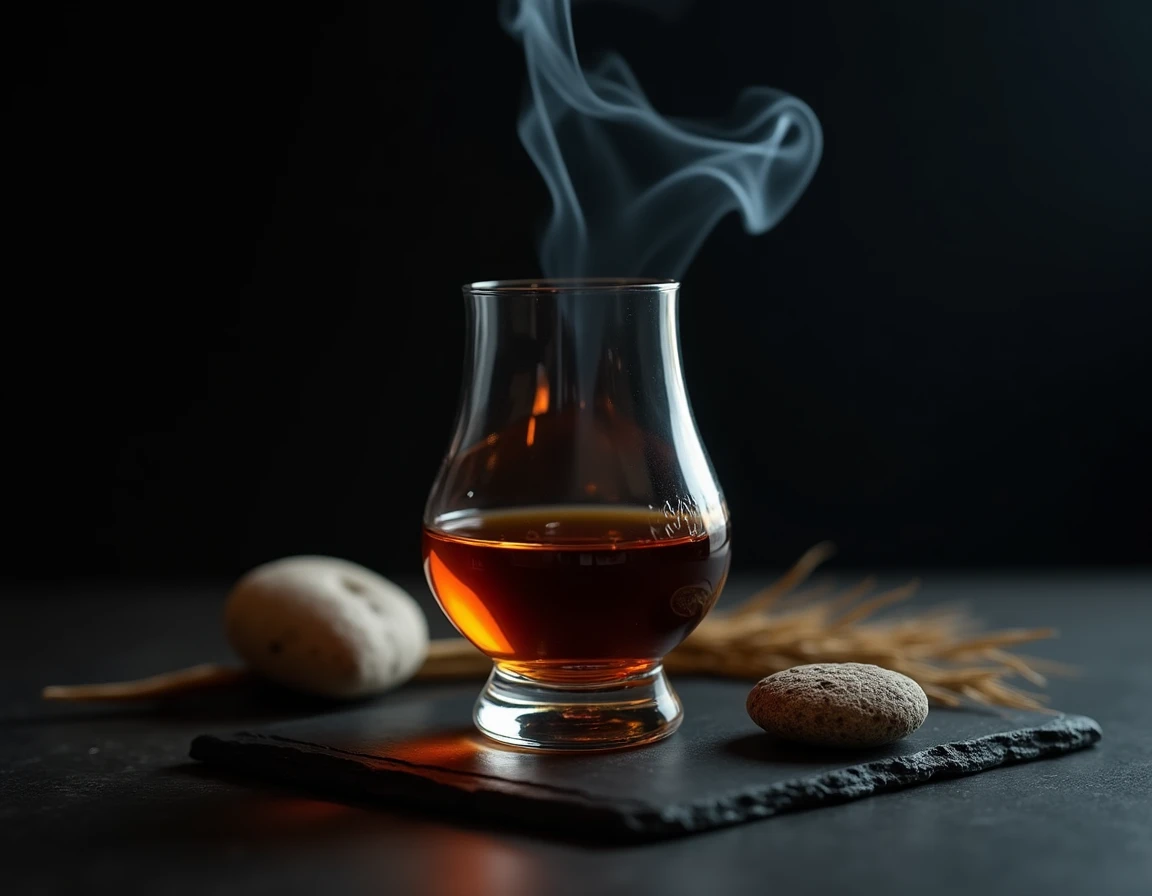
The ideal time to drink Laphroaig is a matter of debate, but for me it has always been the late evening hours. The noise of the day has quieted but the night has not yet deepened; if there is wind outside, all the better. One glass, neat or with a few drops of cold water. Adding water opens up the smoke a little, coaxing the fruit and grain notes hidden beneath to the surface. Not with ice — ice silences Laphroaig.
The first thing that strikes my palate is always the same: smoke and salt, simultaneously. Then comes the iodine — medicinal but not harsh, like seaweed trapped between rocks at the water's edge. The finish is long. Very long. It lingers in your mouth for minutes after you swallow, slowly shifting, warming, sweetening. This is a whisky that rewards patience.
Laphroaig is like Islay itself: it does not open its arms to welcome you. But once it lets you in, you find you have no desire to leave.
Frequently Asked Questions
- When was Laphroaig founded and by whom?
- Laphroaig was founded in 1815 on the island of Islay in Scotland by brothers Donald and Alexander Johnston. The family maintained control for decades, and the distillery continues to produce whisky on Islay to this day.
- Why does Laphroaig have such a smoky and iodic flavour?
- Laphroaig's malted barley is dried by burning peat. The high phenolic content of Islay peat, combined with the distillery's proximity to the Atlantic coastline, gives the whisky its characteristic smoky, iodic, and salty profile.
- Where does Laphroaig's royal warrant come from?
- Prince Charles — now King Charles III — visited the distillery in 1994 and granted Laphroaig a Royal Warrant, the official certificate of royal preference. This distinction still appears on the bottle's label today.
- What is the Friends of Laphroaig programme?
- Friends of Laphroaig is a loyalty programme that offers registered members the symbolic tenancy of one square foot of peat land on Islay. Members receive a certificate with the coordinates of their plot and can, in theory, visit their own 'land.' The programme has millions of members worldwide.
- Should you add water to Laphroaig?
- This is entirely a matter of personal preference. Adding a few drops of cold water opens up the intense smoke somewhat and brings the underlying fruit and grain notes into sharper relief. Ice, however, is generally not recommended — low temperatures suppress the aromas.
- Where is Laphroaig produced and how does that affect its flavour?
- Laphroaig is produced on the island of Islay in Scotland, along the Kildalton coast. The warehouse environment's direct exposure to the Atlantic climate, along with the peat bogs that supply both the water and the malt-drying fuel, directly shape the whisky's maritime and smoky character.