The Story of Ardbeg: The Lost and Reborn Legend of Islay
Founded in 1815, Ardbeg took root in Islay's harshest conditions — it closed, fell into ruin, and was nearly forgotten. Then a miracle came, and today it has been reborn as one of the world's most iconic peated whiskies.
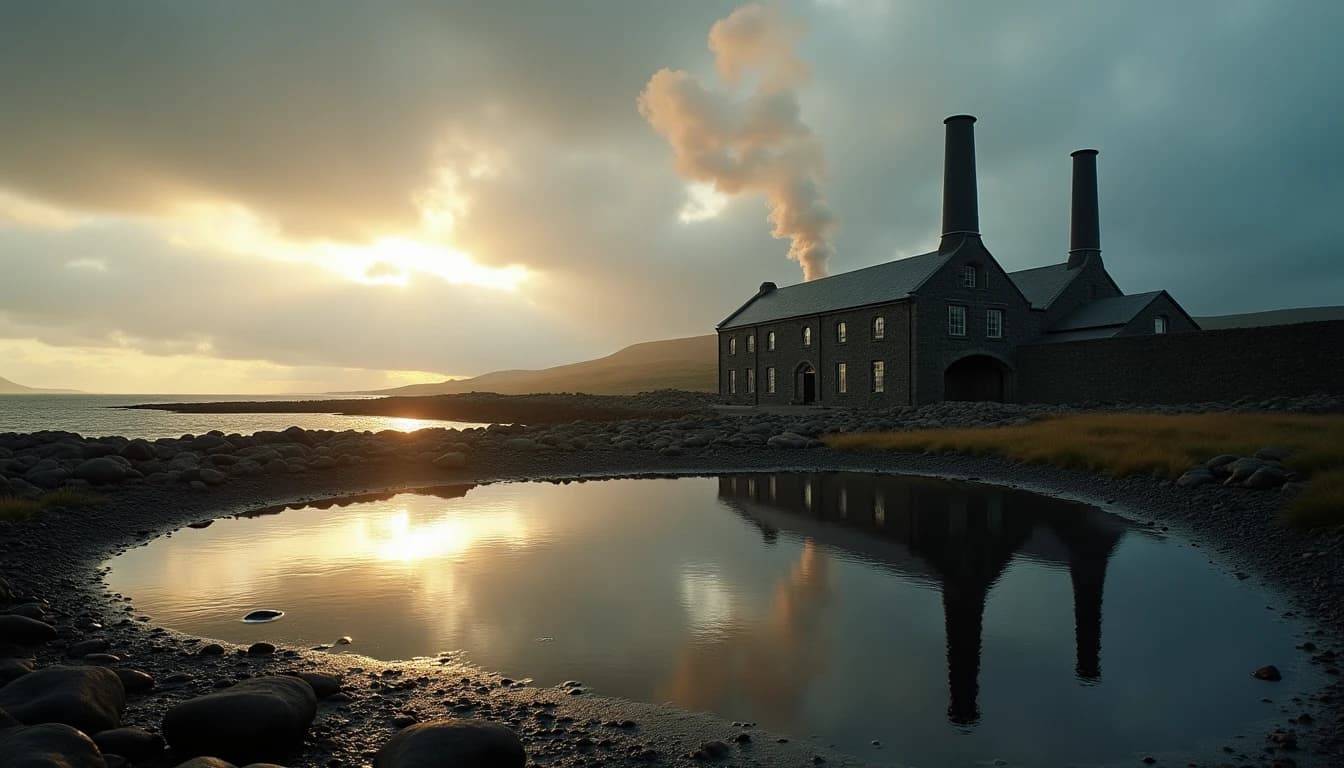
Some stories are kept inside a whisky bottle. Ardbeg's story very nearly could never have been told — because that bottle was once empty, the still had run dry, the casks had rotted, the chimneys had fallen silent. Within those stone walls facing the sea on Islay's southern shore, a dead silence had taken hold. But that is precisely why the story is so beautiful: Ardbeg came back when everyone thought it was gone. And in coming back, it brought an entire culture with it.
1815: A Distillery Founded on the Shore of an Island
The island of Islay sits off Scotland's western coast, jutting out into the Atlantic like an outstretched tongue. It is a place blanketed in peat bogs, where the wind never rests and sea salt works its way into everything. In 1815, John MacDougall established a distillery perfectly suited to this environment: Ardbeg. The name means small headland in Gaelic — a modest title that would, in time, carry a greatness that belied it.
Legal distilling on Islay was still quite new in those days. Illicit distillation had been woven into the island's culture for centuries; official licences only began to proliferate with the Excise Act of 1823. Ardbeg was one of the children of that transitional era. The geography of its location was no accident: proximity to the sea made transportation easier, peat lay right underfoot, and water — flowing from springs east of Port Ellen — ran cold and pure.
While the MacDougall family managed the distillery, Ardbeg began producing one of the region's most highly phenolic whiskies. The peat smoke used to dry the barley left deep impressions on the malt. Those impressions would go on to define Ardbeg's identity in the decades to come: a phenol concentration in the range of 55–65 ppm made it one of Islay's most intensely peated distilleries.
Closure, Silence, and Falling into Ruin
Ardbeg's history was not written in success alone. From the late nineteenth century onward, ownership changed hands frequently. Production capacity was sometimes curtailed, sometimes halted entirely. But the real trauma came in the second half of the twentieth century.
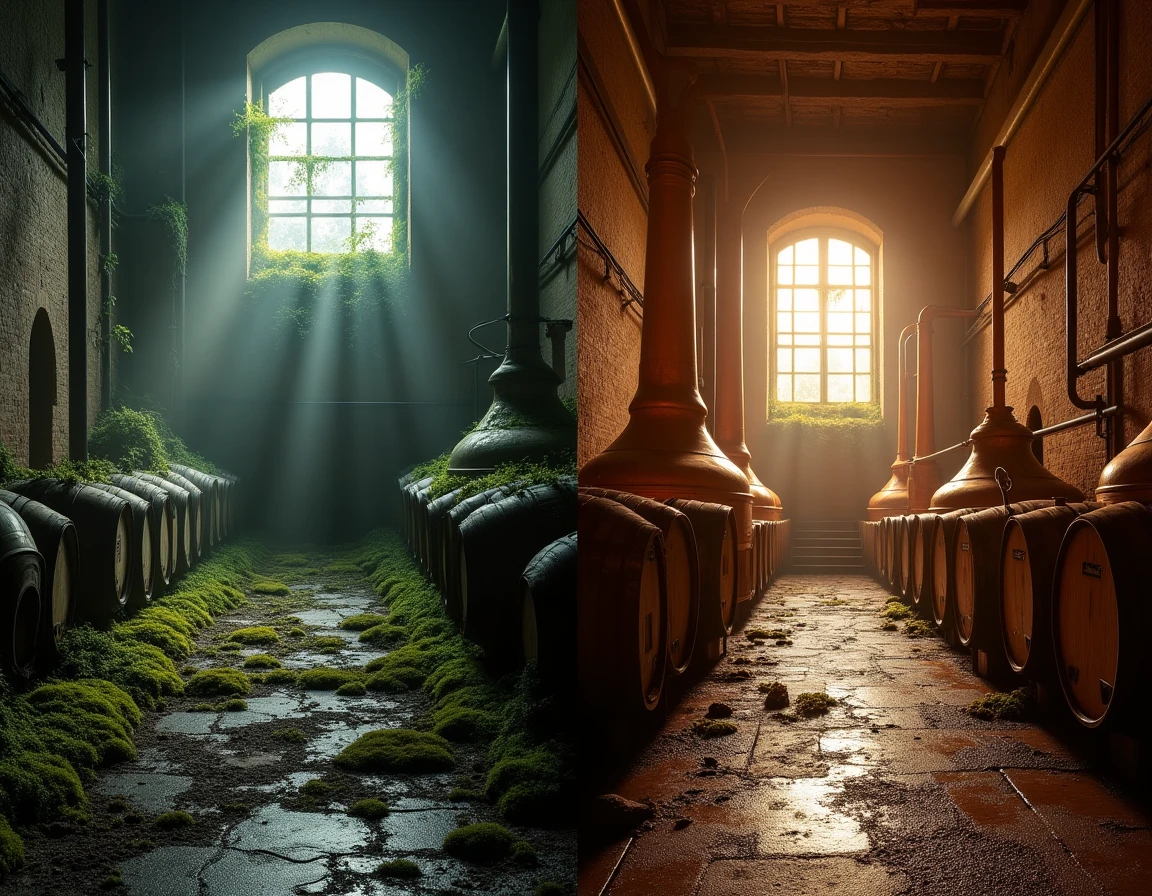
In 1981, Ardbeg closed. Completely. The casks were emptied, the staff dispersed, the equipment left to rust. A few years later, in 1987, a brief trial run of production was attempted — but that too failed to last. By the mid-1990s, Ardbeg had become a forgotten memory of Islay. Its walls facing the shore still stood, but they were hollow inside. Those who visited in those years found moss-covered stones, broken glass, and chimneys condemned to silence — the pipes through which thousands of litres of distillate had once flowed were now thick with rust.
"The death of a distillery is like the forgetting of a language — something that once spoke with those very grounds is lost."
This silence was not merely an economic crisis. On Islay, distilling was bound up with identity. For Ardbeg to stop was for a piece of the island to stop as well. But at precisely this moment, history took an unexpected turn.
The Rescue: Glenmorangie and Rebirth
It was 1997. Glenmorangie — the distillery known until then for the elegant, floral whisky of the Highlands — reached out to Islay and acquired Ardbeg. This was not merely a commercial decision; it was a restoration project, perhaps even a touch of romantic bravado. Two distilleries could hardly have been more different in character — yet it was precisely that contrast which shaped Glenmorangie's decision to leave Ardbeg to be itself.
The equipment was restored. The pot stills — Ardbeg's squat, compact little distillation vessels — were set running again. Staff were hired. And most importantly, peat smoke rose once more from the chimneys. The year 1997 marks the official reopening, though the first distillations took place within that same year. A visitor centre was established, a café opened — the Old Kiln Café — and Ardbeg was transformed back into a living place.
Yet perhaps Glenmorangie's cleverest move was this: leaving Ardbeg to be Ardbeg. The high phenol levels were preserved. Small-scale production was maintained. The authenticity built on a language faithful to its own identity gradually became the nucleus of a global community.
The Ardbeg Committee: A Culture Built Around a Whisky
In 2000, the Ardbeg Committee was founded. It began as a membership programme designed to bring devoted fans together — but it quickly became something else entirely. Today, with hundreds of thousands of members from every corner of the world, the Committee feels less like a marketing tool and more like a genuine community.
Each year, exclusive releases were issued to Committee members. What was communicated was not tasting notes but adventures: casks sent into space, bottles dispatched to Antarctic expeditions, names laden with end-of-the-world allegory — Armageddon, Supernova, Perpetuum. Ardbeg constructed less a whisky brand than a worldview. A peaty, defiant worldview, standing at the very edge of the shore.
The enthusiasts who grew up within this culture are not simply drinking whisky; they speak Ardbeg's language, attend Committee gatherings, and queue in the early hours of the morning for limited releases. Perhaps no example illustrates so concretely just how deep a social bond whisky can forge as the Ardbeg Committee.
Awards and Global Recognition
Ardbeg's rebirth was confirmed not only in spirit but on the record. Whisky Magazine named Ardbeg Distillery of the Year in both 2008 and 2009. In Jim Murray's influential Whisky Bible, Ardbeg Uigeadail featured at the top of the rankings for multiple years. Corryvreckan, Blasda, An Oa — each new release was met with both curiosity and enthusiasm.
Those awards would mean little in isolation; but set against Ardbeg's story, they prove something: a thing restored with conviction can sometimes emerge far stronger than something built from scratch. There is an energy in rebirth — an intensity born from the awareness of how close to being lost it all came.
The Spirit of Islay: Phenol, Peat, and Sea Salt
The first time you taste Ardbeg, that initial contact catches you unprepared. The first wave to strike the palate is fierce, almost medicinal — but only for a moment. Then, beneath the peat smoke, layers of lemon peel, vanilla, seaweed, and black pepper unfold; the finish is long, warming, and salty. This complexity is no accident but the joint product of geography and craft.
To speak technically: Ardbeg's malted barley is dried with peat to achieve a phenol content of around 55 ppm. The stills are small by Islay standards, which yields a more concentrated, more characterful distillate. The bourbon and sherry casks used during maturation draw a gentle frame around the raw power. But the picture within that frame is always wild.
The End of One Story, or the Beginning of a New Chapter?
Ardbeg remains a small distillery to this day. Those stone buildings on Islay's southern shore still stand — but they are alive inside now. The chimneys smoke, the casks fill, the visitors come. And somewhere in the world, as someone slowly swirls a glass of Ardbeg, they sense — thousands of kilometres from that Islay shore — that something is still alive.
For me, Ardbeg is not simply a whisky. It is a story of resistance. Proof that things reduced to ruin can sometimes return in their most powerful form. And every evening, as I take that first sip, I can almost see the first smoke rising from the chimney on a cold winter's day in 1997.
Frequently Asked Questions
- When was the Ardbeg distillery founded?
- Ardbeg was founded in 1815 by John MacDougall on the island of Islay in Scotland. It is considered one of Islay's most historic distilleries.
- Why did Ardbeg close, and when did it reopen?
- Ardbeg closed entirely in 1981 for economic reasons. A brief trial production run was made in 1987, but that too failed to continue. In 1997, it was purchased by Glenmorangie, fully restored, and resumed production.
- What is Ardbeg's phenol level, and what does it mean?
- Ardbeg's malt is dried with peat to a phenol content of approximately 55–65 ppm (parts per million). This is among the highest levels on Islay, and it is what gives the whisky its characteristic intense smoke, medicinal edge, and maritime character.
- What is the Ardbeg Committee and how does one become a member?
- The Ardbeg Committee is a global community of fans founded in 2000. Membership is free and can be obtained through Ardbeg's official website. Members enjoy privileges such as early access to special releases, newsletters, and invitations to events.
- What awards has Ardbeg won?
- Ardbeg was named Distillery of the Year by Whisky Magazine in both 2008 and 2009. Releases such as Ardbeg Uigeadail have also featured repeatedly at the top of Jim Murray's Whisky Bible.
- What makes Ardbeg so different from Glenmorangie?
- While Glenmorangie is known for its elegant, floral Highland character, Ardbeg presents an entirely contrasting profile — powerful peat smoke, high phenol levels, and maritime intensity. After acquiring Ardbeg, Glenmorangie made a conscious decision to preserve that distinctive character.