The Story of Glenfiddich: A Single Malt Revolution by an Independent Family
From the small stone building that William Grant built with his own hands in 1887 to the world's best-selling single malt whisky brand today — this is the story of one family's stubborn independence, the cold waters of Speyside, and the quiet dignity of a stag.
When you open some bottles, what pours out is not merely whisky but a kind of resolve. Glenfiddich has always been that way for me. The first time I pulled the stopper from a Glenfiddich 18 Year Old, before the golden liquid even reached the glass, a question surfaced in my mind: Why didn't this man give up? Why did William Grant, in the freezing winter of 1887, take forty years' worth of savings and lay stone upon stone with his own hands?
A Man's Forty Years and One Night's Decision
William Grant was born in 1839 in the Scottish town of Dufftown. He spent the greater part of his life at distilleries in the area — most notably Mortlach — first as a labourer, then gradually working his way up to bookkeeper and manager. For over twenty years he observed whisky-making from the inside. He committed every cask, every distillation technique, every malt selection to memory. Yet his ambition was never to work for someone else; he wanted to work for his own family's distillery.
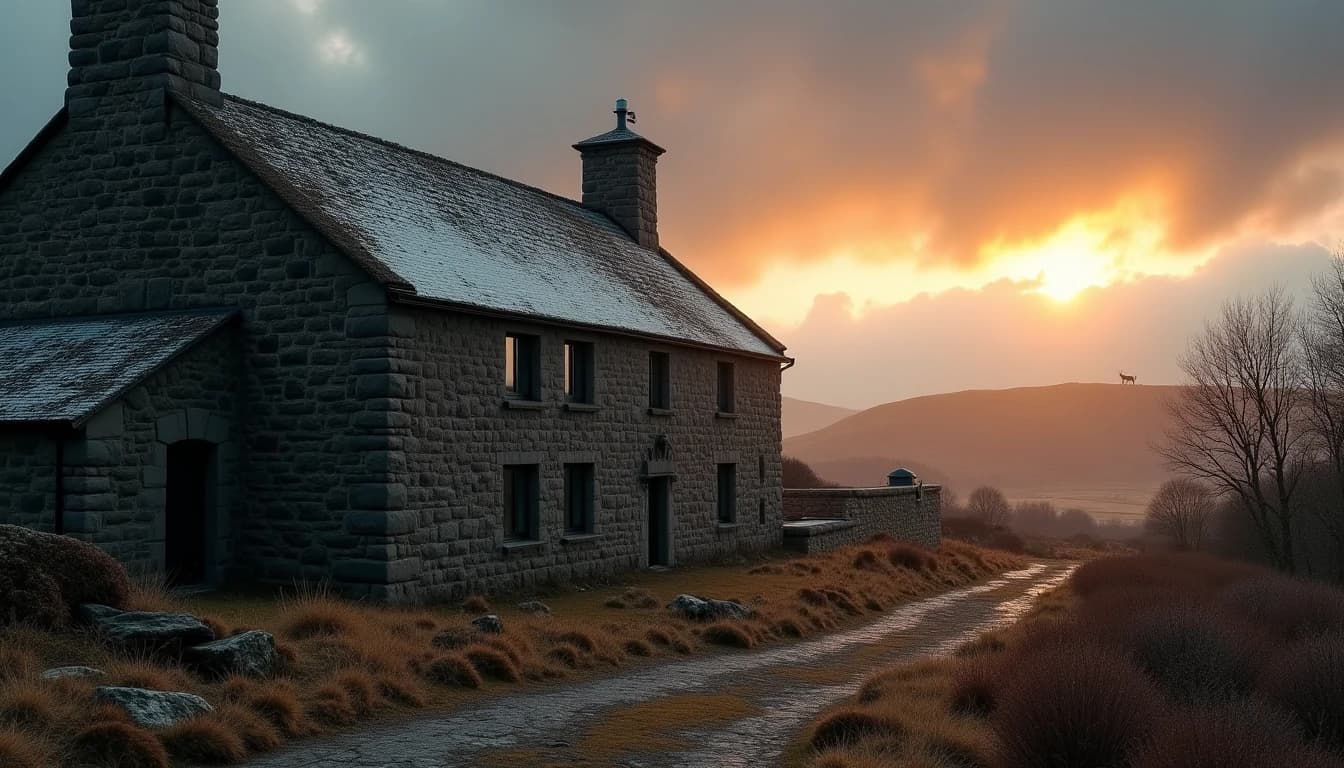
By 1886, he decided he had enough savings — and, more importantly, enough stubbornness. He bought second-hand equipment from the former owner of Mortlach — including at least one alembic still. Together with his sons and daughters, he found a plot of land close to the cold, clear waters of the Robbie Dhu spring: right in the heart of Speyside, at the foot of the Conval Hills.
They built it themselves. They hauled stone, laid walls, stretched the roof. On 25 December 1887 — Christmas Day — the first distillation took place. For William Grant, that date was no coincidence; it was the symbol of a beginning, of a birth.
Speyside's Water, Dufftown's Soil
Glenfiddich means "valley of the deer" in Scottish Gaelic. Here, geography is not merely a name — it is an identity. The waters of the Robbie Dhu spring, filtering down from the Conval Hills, carry the region's mineral-rich yet soft character straight to the distillery. Speyside has the highest concentration of distilleries in Scotland, and the character of this region is woven through with fruity, floral notes — pear and apple above all. Glenfiddich does not simply absorb that character; it has become its very symbol.
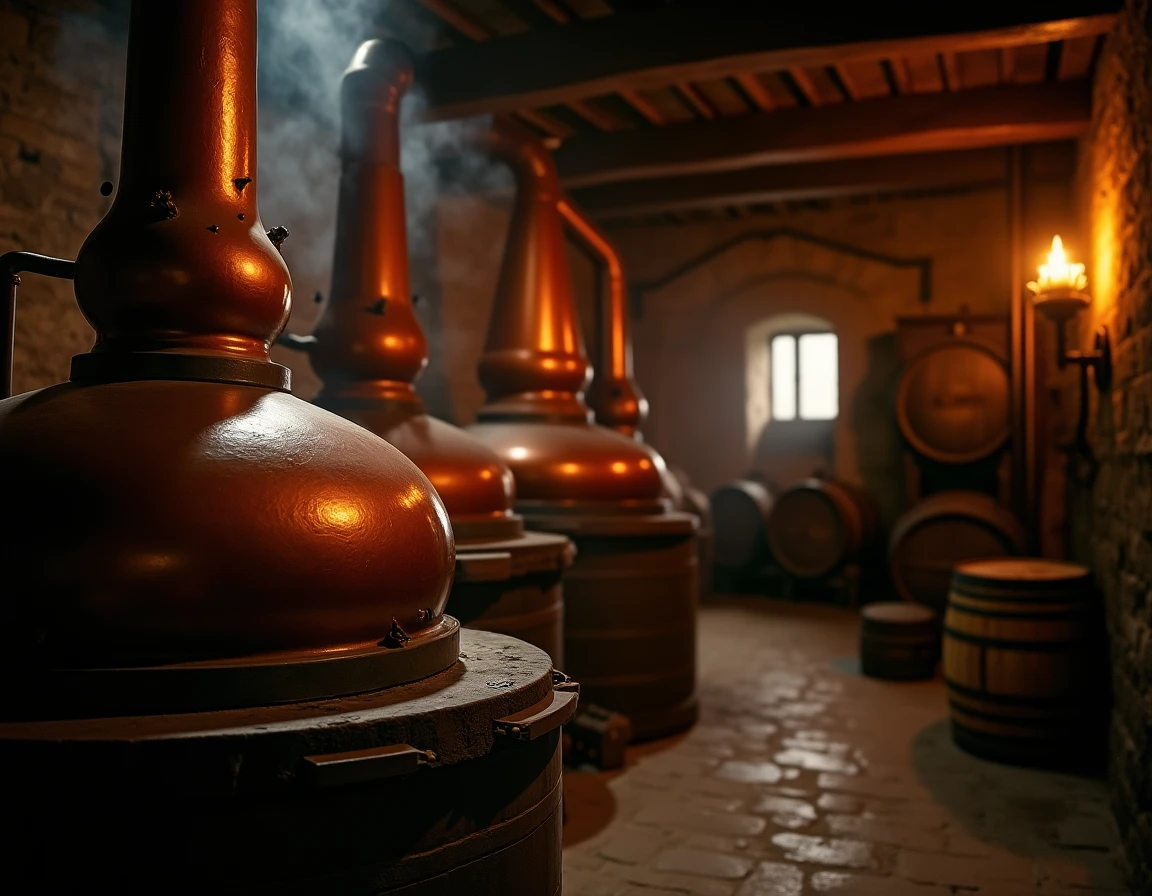
The whisky the distillery produced in its early years was nothing like the widely recognised style of today. William Grant was at first a supplier selling to blended whisky producers. But within the family, in their own casks, the single malt quietly maturing held an entirely different world. The problem was that the world did not yet know it.
Choosing to Remain a Family Company: A Stubborn Decision
By the middle of the twentieth century, the whisky industry was being swallowed by large conglomerates. Small distilleries were either being sold or shutting down. The Grant family felt this pressure; offers arrived, conversations were had. But every time, the answer was the same: No.
That "no" was not mere sentimental attachment. The family never lost its conviction that remaining independent was the only sustainable path — for quality as much as for authenticity. Today, William Grant & Sons is still entirely family-owned; it is not listed on any stock exchange, and it takes no outside investment. For a brand operating on a global scale, this is almost an anomaly. And that independence feeds directly into production decisions: whatever the trend, the Robbie Dhu spring continues to be used. Barley is still sourced from the same region. Even the triangular bottle — unchanged since 1961 — has stayed the same.
The Quiet Dignity of the Stag
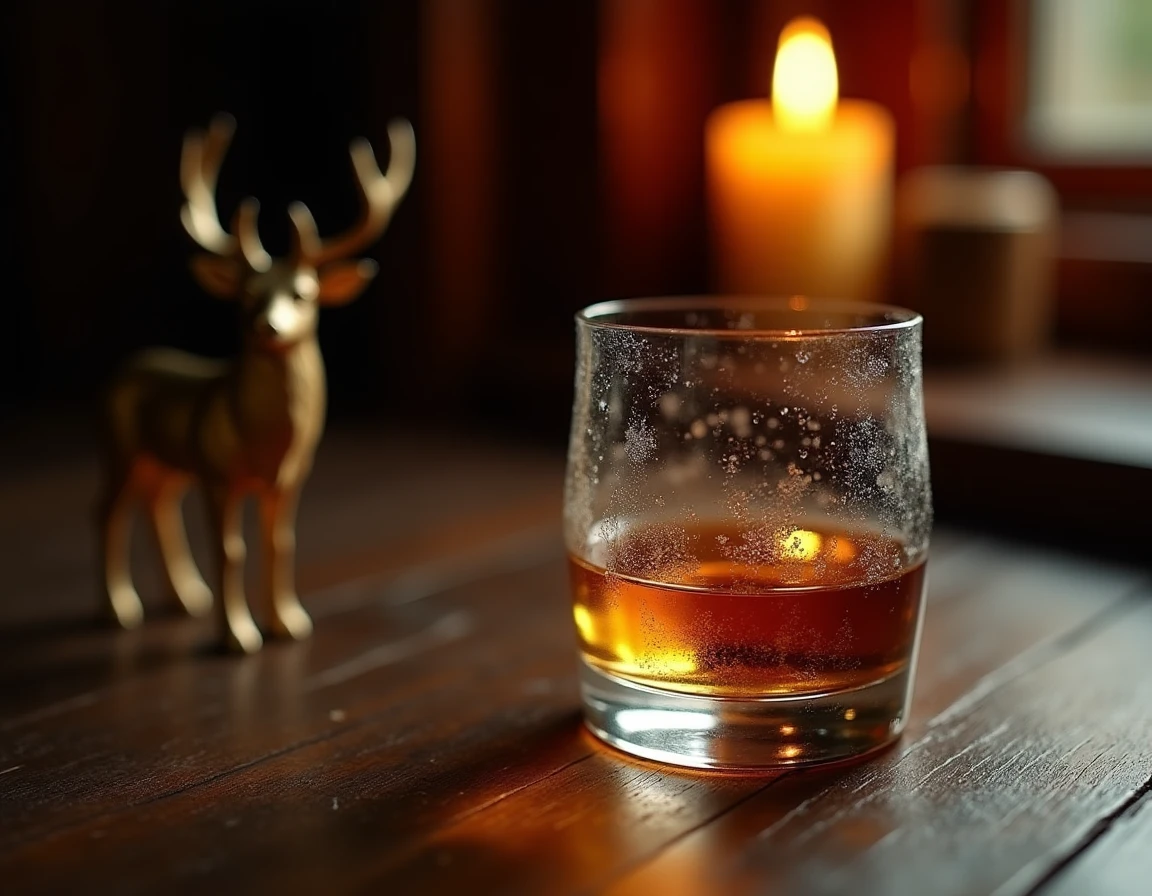
The stag that serves as Glenfiddich's emblem comes from the region's wildlife, but for me it has always stood for something deeper. The stag does not run, does not flee. It stands, looks, and challenges the world simply by being. William Grant's decision in 1887 was precisely that: stand still, look, and keep on staying.
From the brand's earliest official logos, the stag's silhouette has never changed. That same posture sits on the shoulders of every triangular bottle. When I taste it — the 18 Year Old especially, or the Solera Vat — I feel as though I can sense that quiet obstinacy on my palate. Perhaps that is mere projection. Or perhaps all those years of patient cask-waiting seep into the liquid somehow.
Introducing Single Malt to the World: The Revolution of 1963
The year 1963 stands as one of the most pivotal turning points in whisky history. Until that point, single malt whiskies were consumed almost exclusively within Scotland, in local markets. Blended whisky — brands like Johnnie Walker and Chivas — dominated the international stage. Under the leadership of Sandy Grant Gordon, Glenfiddich became one of the first distilleries to actively market single malt as an international product.
The move looked like madness. Why would anyone want one distillery's whisky when they could have a blend? But the family believed in it. Samples were sent to American and European markets; the story was told — just like that, as a story. And people listened.
Today, the single malt category is the backbone of the global premium whisky market. At the root of that lies Glenfiddich's decision of 1963. In the decades that followed, many Speyside and Highland distilleries took the same path. But it was that stone building in Dufftown that took the first step.
Cask Experiments: Pushing Boundaries Without Breaking Tradition
The last thirty years have been extraordinarily fruitful for Glenfiddich in terms of cask programmes. The Solera system — borrowed from Spanish sherry production, using large oak vats that are never completely emptied — was applied to Glenfiddich 15 Year Old in 1998. Nothing like it had been seen in the Scotch whisky world before: each filling blending with the last gave the whisky a layered, unbroken continuity.
Beyond that came series such as the IPA Cask Finish, Project XX and Winter Storm, along with finishing experiments in port, bourbon, sherry and Champagne casks. Each one sparked debate; some traditionalists raised an eyebrow. But Glenfiddich undertook these experiments not to dilute the brand, but to pursue a single question: how deep can this malt go?
Late in the evening, sitting with a glass of Glenfiddich Grand Cru — that weary-yet-elegant variant rested in Champagne casks — I find myself thinking that the question is still open. And that openness, for me, is the finest thing about it.
Glenfiddich as a Legacy
Today Glenfiddich produces more than ten million bottles a year. It has held the title of the world's best-selling single malt for decades. But the numbers interest me little. What interests me is this: the first fire William Grant lit on Christmas morning 1887 is still burning, in the same region, fed by the same water source. The family has changed, the equipment has been modernised, the label has been updated a handful of times. But the stubbornness in the shadow of the Conval Hills has remained.
Glenfiddich is more than a whisky brand. It is the story of independence, of patience, and of the most tangible legacy a father could leave his children. You do not need to strain to see this in every glass — you only need to listen.
Frequently Asked Questions
- When was Glenfiddich founded and by whom?
- The Glenfiddich distillery was founded by William Grant on 25 December 1887 in Dufftown, in Scotland's Speyside region. Grant built the premises himself, together with his family.
- What does the name Glenfiddich mean?
- Glenfiddich means "valley of the deer" in Scottish Gaelic. The name reflects both the geography in which the distillery sits and the stag that serves as the brand's emblem.
- Why is Glenfiddich considered such an important brand?
- In 1963, Glenfiddich was one of the first distilleries to actively market single malt whisky as an international product. That step pioneered the birth of the single malt category, which today forms the backbone of the global premium whisky market.
- Is Glenfiddich still a family company?
- Yes. William Grant & Sons remains entirely owned by the Grant family to this day — it is not listed on any stock exchange and takes no outside institutional investment.
- What is Glenfiddich's Solera system?
- The Solera is a method borrowed from Spanish sherry production: large oak vats are never completely emptied, so each filling blends with the one before it. Glenfiddich introduced this system to the Scotch whisky world in 1998 with its 15 Year Old expression.
- Where is Glenfiddich produced?
- Glenfiddich is produced in Scotland's Speyside region, in the town of Dufftown at the foot of the Conval Hills, using the waters of the Robbie Dhu spring.