The Story of Jack Daniel's: Tennessee's Legendary Distiller
The road from a church cellar a curious boy once wandered into, to the world's most recognizable whiskey bottle — Jack Daniel's story is not one of a measured life, but of an boundless passion.
Some stories carry a deeper meaning than the liquid inside the bottle. When it comes to Jack Daniel's, the world behind the label — the Tennessee hills, the charcoal smoke, a boy with a burning curiosity — is something far more complex and far more human than any single sip. The first time I truly grasped this story, the glass in my hand felt a little heavier.
Little Jasper's Great Legacy
Jasper Newton Daniel was born in 1849 near the town of Lynchburg, Tennessee. His exact date of birth remains disputed — some sources point to 1846 — but that ambiguity perhaps suits his character. Jack Daniel was never someone who could be fully understood. His mother died young, his relationship with his stepmother was distant and cold. His childhood unfolded on the hard land of the South, where the soil tasted of salt and life's rhythm was merciless.
It was in the midst of this turmoil that young Jasper's path crossed that of a man named Dan Call — a preacher who was also a distiller. Call delivered sermons and made whiskey for the locals; in those days, no one found the contradiction troubling. Young Jack sat at Call's side reading the Bible and watching over the still. And as many might guess, the still pulled harder.
In time, Call came under pressure from his congregation and was forced to give up distilling. But before he did, he handed the trade — his recipe, his knowledge, his experience — over to young Jack. He entrusted a secret to a child. Jack never let go of that secret.
Lynchburg: Whiskey Flowing Through a Dry Town
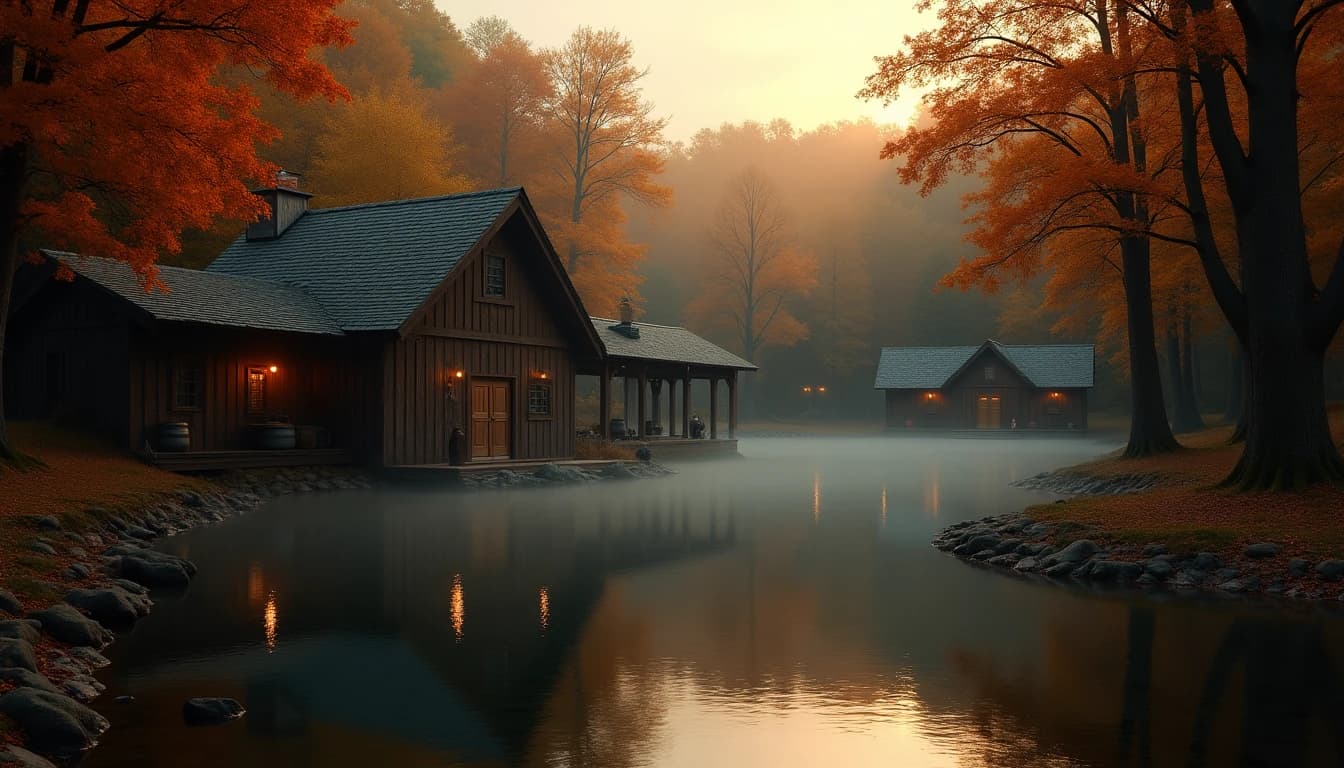
In 1866, Jack Daniel officially established his distillery in Moore County, Tennessee. It holds the title of the oldest registered distillery in US federal records — or at least, the Jack Daniel Distillery has never been shy about claiming that distinction. The choice of location was no accident: Cave Spring Hollow was fed by clear, cold spring water. Low in iron minerals, this water is ideal for distilling — too much iron disrupts fermentation.
But the real irony begins here. Moore County remains a dry county to this day. In other words, Jack Daniel's produces its world-famous whiskey on land where it cannot legally sell its own product. Tourists come to Lynchburg, take the tour, sample a modest taste, and on their way out are obliged to buy their bottle just outside the county line. This absurd fact draws a small smile every time it's told — and Jack Daniel himself would surely have appreciated the irony.
Charcoal and the Lincoln County Process
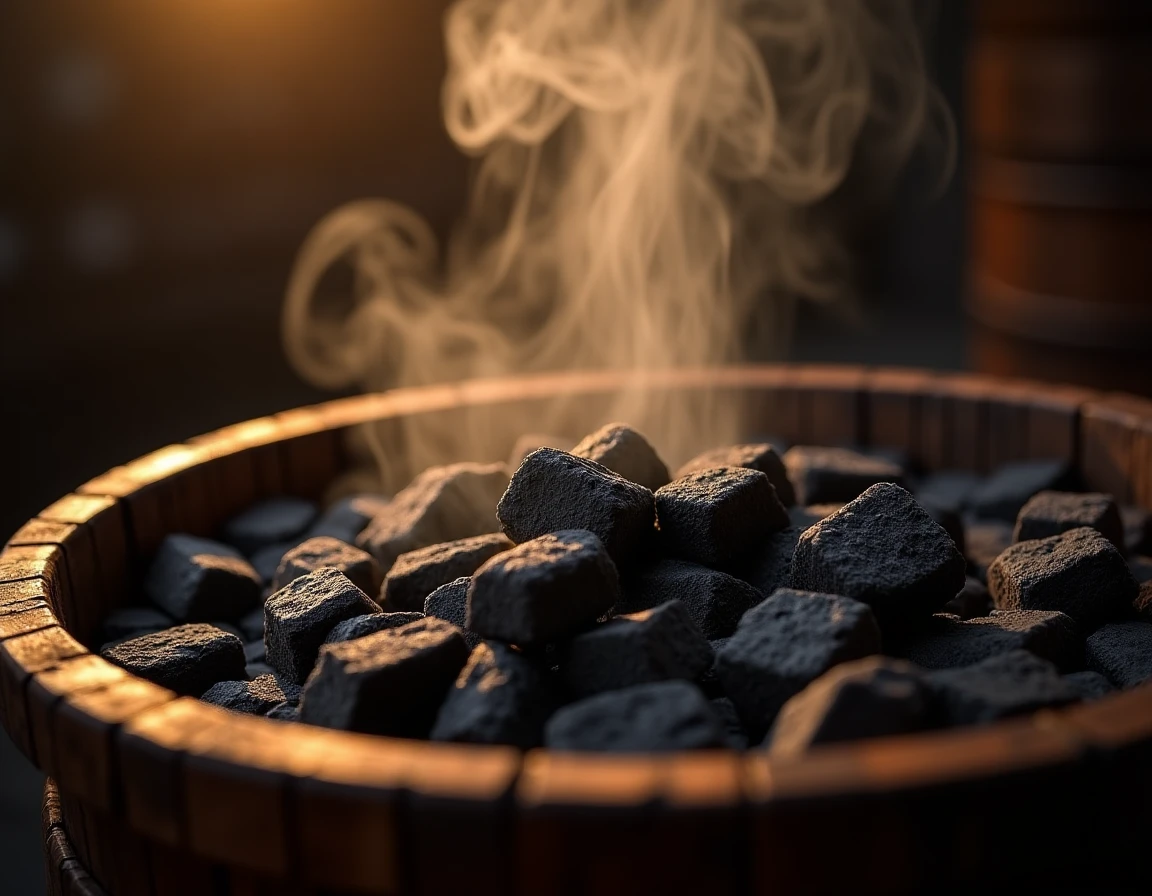
The fundamental technical distinction that sets Jack Daniel's apart from other American whiskeys — Bourbon in particular — is the process known as charcoal mellowing, the defining characteristic of Tennessee Whiskey. It works like this: before entering the barrel, the distilled spirit is filtered drop by drop through a column of sugar maple charcoal roughly three meters tall. The process can take up to ten days.
The sugar maple charcoal is first burned in the open air. The scent of the smoke can sometimes be detected several kilometers away. This step demands as much time and patience as the distillation itself. The result? Something smoother than Bourbon, lightly veiled with notes of smoke — a category unto itself.
"The liquid tells you everything. You just have to know how to listen." — A saying attributed to Jack Daniel, perhaps apocryphal, but apt all the same.
It is this process that legally qualifies Jack Daniel's as Tennessee Whiskey rather than Bourbon. The distinction may seem minor, but the palate detects it. The faint sweet woody smoke that rises on the nose sets it noticeably apart from Bourbon's sharp burnt-caramel edge — and once you've noticed the difference, it becomes difficult to go back.
The Birth of the Black Label
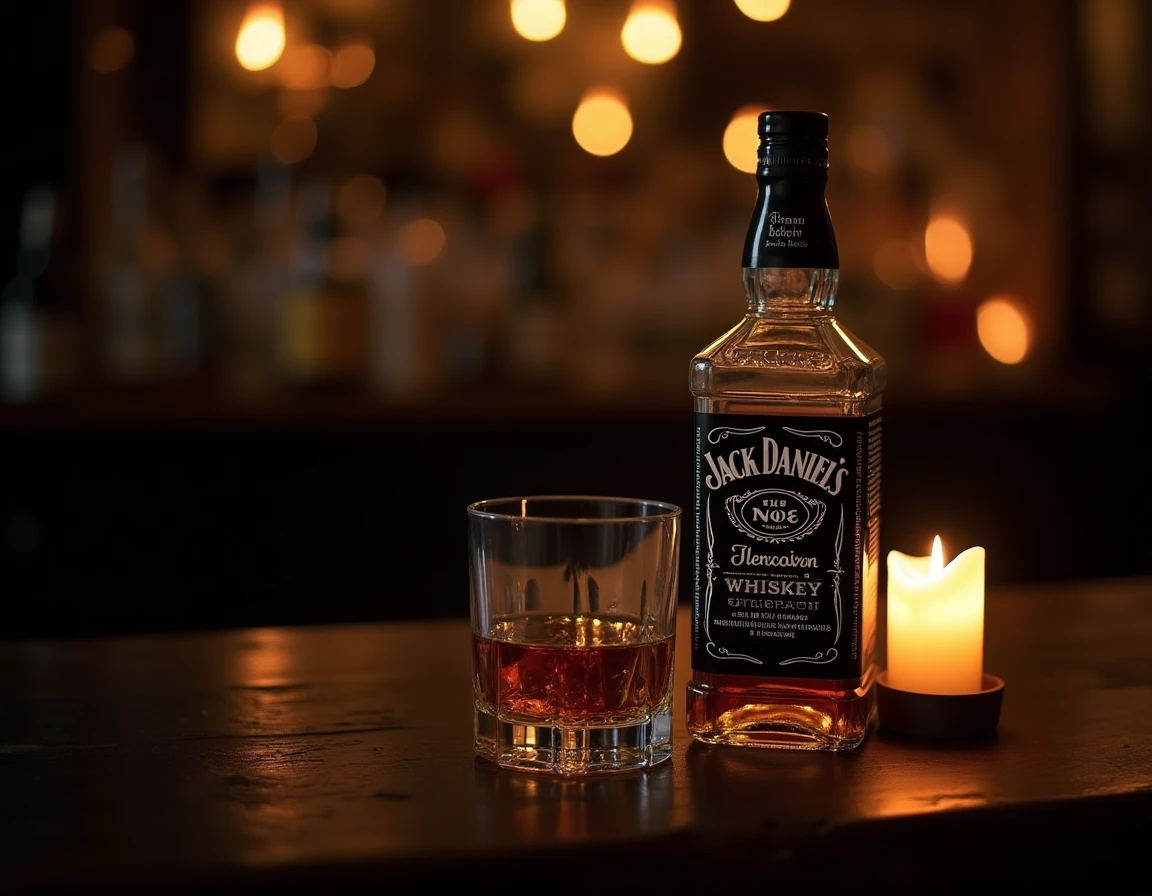
Jack Daniel's Old No. 7 — better known as the Black Label — is today one of the world's best-selling American whiskeys. Yet the origin of "No. 7" remains entirely unknown. Was it a seventh warehouse? A seventh recipe? The cipher of a personal memory? Official records are silent, and that silence has become an inseparable part of the brand's mystique.
In 1895, Jack Daniel's won a gold medal at a fair in St. Louis, making its first appearance on an international stage. The bottle's angular, square form with one flattened face went on to become the most instantly recognizable element of the brand's visual identity across decades — distinctive enough to be spotted at a glance even on a crowded bar shelf.
Jack Daniel passed away in 1911. According to legend, what led to his death was kicking a safe in frustration after failing to remember the combination. Gangrene set in and he could not be saved. A man who had devoted his existence to whiskey lost his life in front of a safe. This ending carries a strange harmony with the rest of the story.
Frank Sinatra and the Loyalty of Ol' Blue Eyes
One name stands out above all others in cementing Jack Daniel's place in popular culture: Frank Sinatra. Sinatra never concealed his devotion to Jack Daniel's. A glass of Black Label was always at his side when he took the stage. It is said he declared, "When you bury me, bury me with this bottle" — and so it was. At his funeral in 1998, a bottle of Jack Daniel's was placed in his coffin.
This relationship transformed the brand from a regional Southern whiskey into the drink of Hollywood and the Rat Pack. Dean Martin drank it. Sammy Davis Jr. drank it. And all these figures made Jack Daniel's a symbol of a certain kind of cool. This image, built not through marketing budgets but through genuine personal choice, remains one of the brand's most powerful legacies to this day.
The Sinatra connection takes on added meaning late in the evening, when a glass of Black Label sits in front of you at a dimly lit bar. You can almost hear the voice.
Becoming a World Brand: From a Humble Small Town to a Global Icon
Lynchburg is today a small town of fewer than six thousand people. Yet the number of visitors it receives each year surpasses many of Tennessee's larger cities. Jack Daniel Distillery welcomed around 300,000 visitors annually — those were the pre-pandemic figures. Worldwide, the brand has a distribution network spanning more than a hundred countries.
Brown-Forman Corporation has owned Jack Daniel's since 1956. The scale has grown, production has modernized, but distilling continues in Lynchburg. Cave Spring Hollow still flows. The charcoal still burns. And that black label still stands the same way on bar shelves across the world: a little proud, a little humble, entirely its own thing.
Is Jack Daniel's a perfect whiskey? The answer to that question varies from person to person. But the perfection of the story is beyond doubt. A child's curiosity, a preacher's surrender, the purity of a spring, a man's stubbornness, and decades of culture woven around a single bottle — all of it hits the mind before it ever hits the palate. And I think that's exactly how the best whiskeys are meant to be drunk.
Frequently Asked Questions
- Why is Jack Daniel's called Tennessee Whiskey and not Bourbon?
- Jack Daniel's undergoes a filtration step known as charcoal mellowing — the Lincoln County Process. Before entering the barrel, the spirit is filtered through a column of sugar maple charcoal roughly three meters tall. This additional step is the fundamental distinction between Tennessee Whiskey and Bourbon. Bourbon does not go through this process.
- Where does the name 'No. 7' on Jack Daniel's come from?
- There is no definitive answer to this question. Various theories have been put forward over the years: a seventh warehouse, a seventh recipe attempt, or a personal significance. Official records offer no clear explanation, and this air of mystery has become part of the brand's culture.
- Is alcohol sold in Lynchburg, Tennessee?
- Lynchburg's Moore County is one of the dry counties in the United States. As a result, Jack Daniel's whiskey cannot be freely sold in the very place where it is produced. Tourists can visit the distillery and enjoy a limited tasting, but must purchase a bottle outside the county. This situation is one of the brand's most well-known ironies.
- How did the connection between Frank Sinatra and Jack Daniel's begin?
- There is no official starting point for Frank Sinatra's preference for Jack Daniel's — it was an organic devotion. Sinatra frequently kept a glass of Black Label by his side during stage performances and shared this openly with the public. When he passed away, in accordance with his wishes, a bottle of Jack Daniel's was placed in his coffin. This loyalty made a significant contribution to the brand's iconic status in popular culture.
- Who founded Jack Daniel's, and who owns the company today?
- The distillery was founded by Jasper Newton Daniel (Jack Daniel) in 1866 and is today part of Brown-Forman Corporation, which acquired Jack Daniel Distillery in 1956. Production has continued at the same location in Lynchburg, Tennessee, since the distillery's founding.
- What raw ingredients is Jack Daniel's made from?
- Jack Daniel's Old No. 7 is produced from a grain mash consisting primarily of corn (around 80%), along with rye and malted barley. The spring water drawn from Cave Spring Hollow, which is low in iron minerals, plays a critical role throughout the fermentation and distillation process.
Related
The Story of Jameson: Ireland's Gateway to the World
A journey that began when a Scotsman set foot on the Dublin quays has since become the world's best-selling Irish whiskey. A heritage that matured between the stone walls of Bow Street is the story of both a distiller and a nation.