Hibiki: The Silent Rise of a Japanese Legend
Hibiki is perhaps the most elegant expression of Japanese aesthetics and whisky mastery, gathering Suntory's accumulated knowledge of over half a century into a single bottle. When I tasted it for the first time, I understood: this was not a drink — it was a philosophy.
Harmony Hidden Within a Bottle
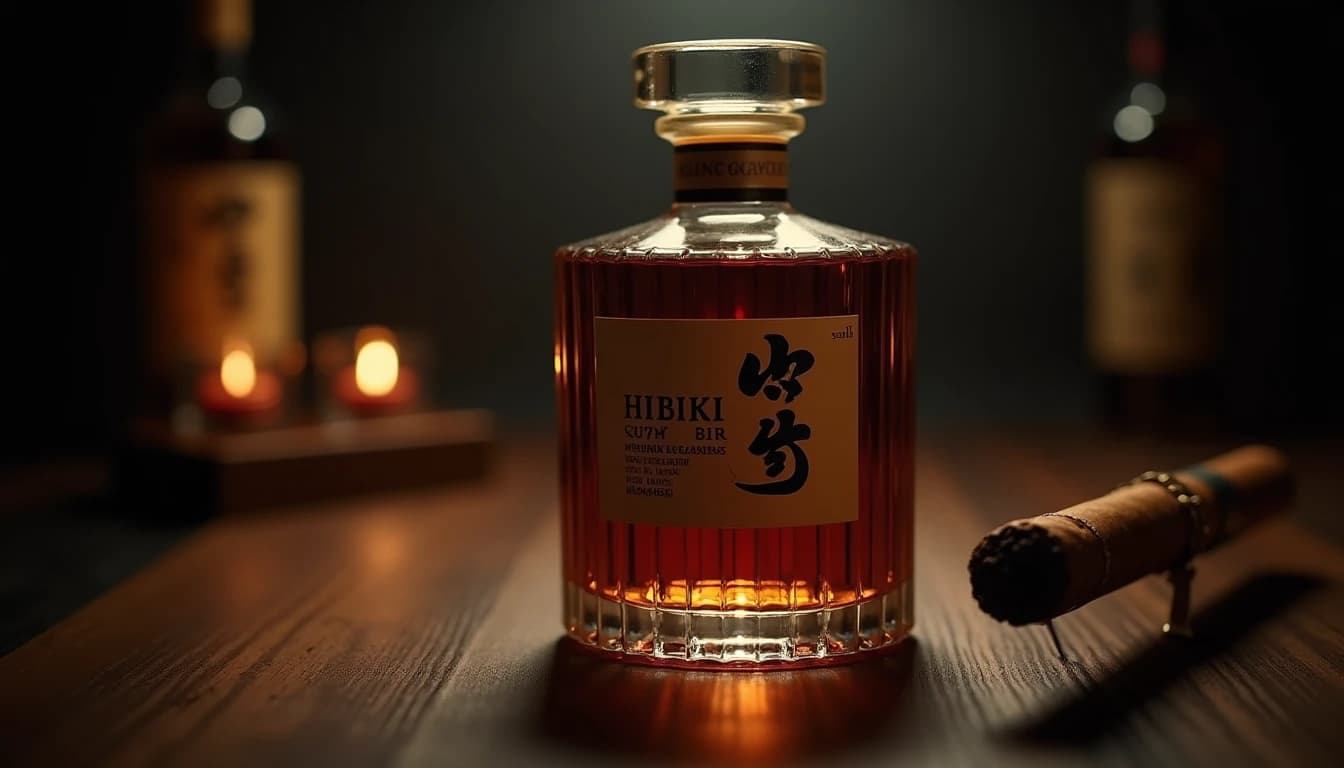
Some things transform you at first encounter. I did not meet Hibiki in Kyoto, but during one of Istanbul's quietest hours, in a corner of my own home. When my friend set that 24-faceted bottle on the table, I watched the way the amber liquid caught the light — as if a moment of dawn had been captured inside. I had not yet tasted a single drop. And yet I already sensed that something was different.
Hibiki means "echo" or "harmony" in Japanese. Written in kanji — 響 — even the silence carries visual meaning. This word is the perfect expression of the deep, serene impression left on the palate, despite the complex architecture of blended malt and grain whiskies. It is a single note; yet that note is the carefully tuned resonance of dozens of instruments.
Suntory's Long Journey: The Founding of a Dream
To understand Hibiki, one must first understand Suntory. And to understand Suntory, one must begin in 1899, with the dream of a young man. Shinjiro Torii had established a business in Western-style spirits — virtually unknown in Japan at the time — and in 1923 decided to build his country's first whisky distillery. The Yamazaki Distillery rose in the town of Shimamoto, near Osaka, at the confluence of three rivers — the Katsura, the Uji, and the Kizu. Ancient Japanese aesthetics held that point of convergence sacred. So did Torii.
Yet this harmony did not come easily. Masataka Taketsuru, who worked alongside Torii, had brought traditional distillation techniques learned in Scotland back to Japan. The two men held deeply divergent visions: Taketsuru wished to remain faithful to the Scotch style, while Torii wanted to create something suited to the Japanese palate, the Japanese climate, the Japanese spirit. This disagreement ultimately led to Taketsuru's departure — he went on to found Nikka. But Suntory walked its own path. And every drop gathered along that path over the decades waited in casks, destined one day to meet in a bottle bearing the name Hibiki.
1989: The Birth Date of a Legend
Hibiki first appeared in 1989. It was the 90th anniversary of Suntory's founding. The company's master blender, Keizo Saji — son of Shinjiro Torii — wished to bring together malt and grain whiskies he had spent long years maturing, creating a blend unlike anything Japan had ever seen. The aim was not to highlight the character of a single distillery; rather, it was to capture the complex harmony created by multiple distilleries and cask types — American oak, Spanish oak, and Mizunara oak — working in concert.
Mizunara oak is perhaps the most distinctive element of this formula. This tree, which grows only in Japan, is extremely porous and wishes to converse with the whisky resting within it over many long years. Its fragrance is infused with sandalwood, the incense rising from Japanese temples, and the silken sweetness of ripe fruit. This character cannot be obtained from any other species of oak. Much of Hibiki's depth originates from this rare material.
In 1989, Japan's whisky market was enduring a difficult period. Western-style spirits had fallen out of favour among Japanese youth, and traditional sake and shochu were experiencing a resurgence. Hibiki stepped onto the stage at precisely this moment — quietly, in an understated bottle. Yet that bottle would, in time, find its own voice.
The Philosophy of the 24-Faceted Bottle
The Hibiki bottle was not designed arbitrarily. This 24-sided crystal structure symbolises the 24 seasonal periods — sekki — by which the Japanese calendar divides the year. In Japanese philosophy, nature is never understood through two grand seasons but through far subtler transitions. Snow melts slowly; blossoms fall over three weeks; mountain mist dissolves in the afternoon. The Hibiki bottle translates this understanding into glass and light.
Each time I touch the Japanese paper — washi — wrapped around the bottle's neck, I feel the same thing: this is not a drink, it is an object. Even opening the packaging becomes a ritual. Some collectors never discard their empty bottles; some use them as decoration, others place things inside them. Very few whisky bottles in the world possess such powerful visual identity.
The Art of Blending: Singularity Within Multiplicity
Hibiki is composed of whiskies from multiple Suntory distilleries: Yamazaki, Hakushu, and Chita. Yamazaki comes forward with its fruity and delicate character; the fresh, almost herbal tones of Hakushu, born of high altitude, complete the balance; while the Chita grain whisky lends all of these characters a binding silkiness and lightness. The diversity of cask selection — American white oak, Sherry, and Mizunara — deepens the layers still further.
Suntory's master blenders effectively reconstruct this blend anew each year. Because casks age, climates shift, warehouse conditions evolve. Maintaining consistency is not a science but an art. In Japan, this art is called monozukuri — the passion for making things, producing things, creating something with mastery. Hibiki is that word made concrete in the form of whisky.
The blender's role here resembles that of an orchestra conductor. To bring together the different notes from hundreds of casks into a single score; to soften the dominant voices, to draw forward the tones that have remained quiet. And to ensure that what emerges is something no single cask could have produced on its own.
A Journey Through the Senses: From Eye to Palate
Appearance
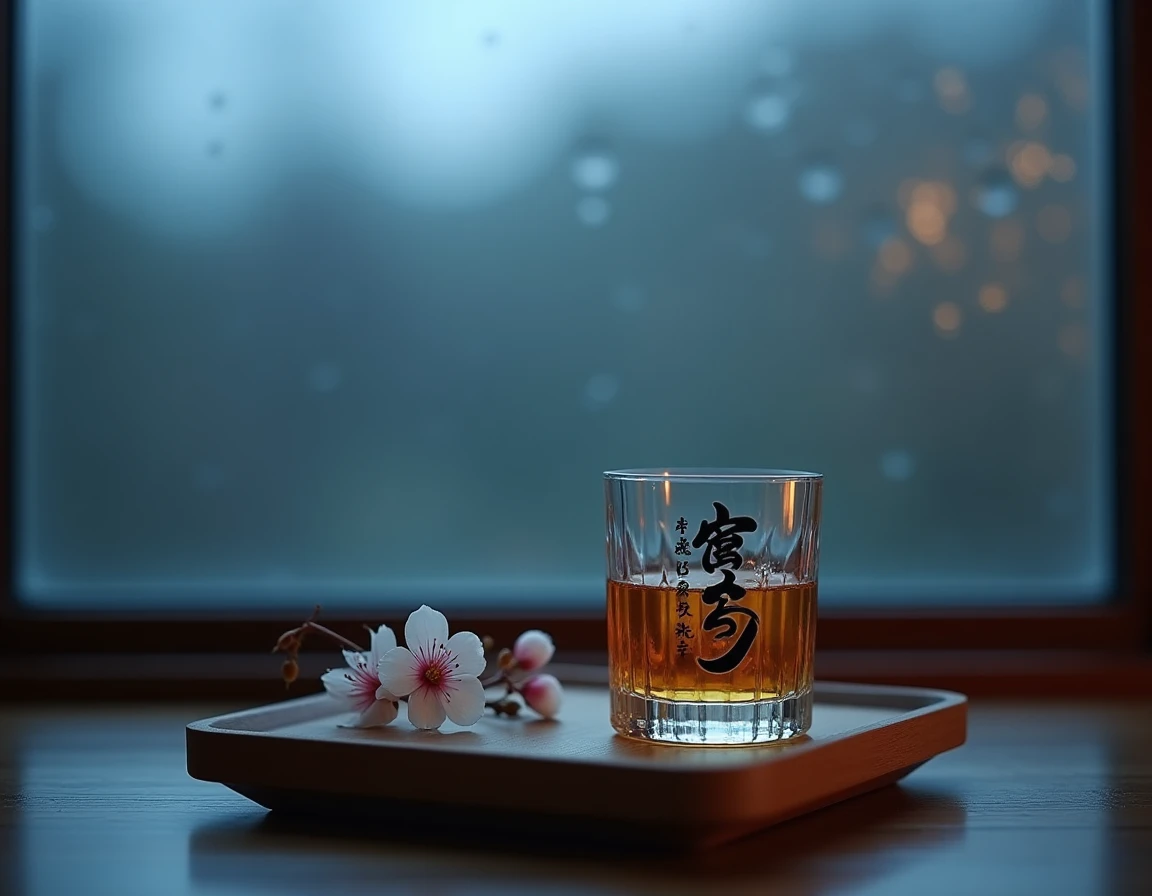
A deep amber in the Glencairn glass — neither too light nor too dark. Held to the light, I catch that threshold where a warm brown passes into red. The legs flow slowly, betraying the whisky's richness and maturity.
Nose
The first scent opens with a gentle celebration of fruit: dried apricot, ripe orange, a hint of hazelnut. After a moment of patience, the nose descends deeper — oak, sandalwood, incense. This is Mizunara's signature. A delicate note of honey and cinnamon settles over it; then comes a floral trace, almost reminiscent of Japanese cherry blossom. Nothing is excessive, nothing is lacking. The nose does not challenge you in the end; it accompanies you.
Palate
What struck my palate on the first sip was its softness. A delivery that does not impose itself, but simply embraces you. The sweetness of peach and orange marmalade is balanced by a gentle spiciness. In the mid-palate, the dark dried fruits worked by the Sherry cask begin to emerge — raisins, figs. Then, as the flavours gradually recede, the tannic trace of oak, chocolate, and pistachio make themselves known. The finish is neither dry nor cloyingly sweet; it hangs suspended at a delicate point of balance between the two.
Finish
A long, warming finish that continues to wrap itself around you. The traces of incense and spice linger for minutes. After a single dram I paused and gazed out the window; it was over, yet it was not over. This is Hibiki's most magical quality: the finish is not a closing, but a sense of something stretching on and on.
Global Recognition: Awards and the Spread of a Quiet Revolution
Hibiki 21 Year Old was named the World's Best Blended Malt Whisky at the World Whisky Awards in both 2013 and 2014. These accolades became a symbol of Japanese whisky's arrival on the global stage. But even before the awards, evaluations by Whisky Advocate in the early 2000s and Jim Murray's Whisky Bible scores had already placed Suntory products on the radar of Western collectors.
When Jim Murray declared the Yamazaki Single Malt Sherry Cask 2013 the world's finest whisky in 2014, the international press was stunned. Headlines read: "Japanese whisky beats the Scots." In the shadow of those headlines, Hibiki too was rediscovered — not just by experts, but by a much wider audience. The result: demand surged and stocks evaporated.
In the film Lost in Translation, Bill Murray — seated opposite Scarlett Johansson — was filming an advertisement for Suntory. That scene is not merely a film scene; it reads like a document of Japanese whisky's entry into global popular culture. Hibiki does not appear directly in that film, but the elegance etched into Suntory's international image aligns perfectly with Hibiki's own aesthetic.
Scarcity: The Price of a Legend
After 2015, Hibiki enthusiasts found themselves facing a serious problem: the bottles grew increasingly difficult to find. Suntory did not have sufficient stock to meet surging global demand. Because whisky production permits no impatience — there is no alternative to waiting for the liquid that entered the casks 12, 17, 21, or 30 years earlier. Like trees, whiskies do not take kindly to being hurried.
In its response to this situation, Suntory decided to remove the age statement from the bottle. The no-age-statement (NAS) version released under the name Hibiki Japanese Harmony sparked considerable debate. One camp interpreted this move as a compromise of quality; others argued that the blender's hand had been freed, able to work with a broader pool of casks. I lean closer to the second view — because when I tasted Harmony, I found myself thinking, "this is good too."
Hibiki 17 Year Old was discontinued in 2018. This decision caused deep sorrow among collectors. For many, this had been their favourite — a perfect bridge between the vibrancy of the lighter expressions and the depth of the more advanced ages. The remaining bottles on the secondary market now command astronomical figures.
Japan's Philosophy of Quiet Mastery and Its Mark on Whisky
Japanese culture has the concept of shokunin: the artisan who dedicates their life to perfecting their craft. This master might be a sushi chef, a knifemaker, a potter. Or a blender. Suntory's master blenders — Shingo Torii, Shinji Fukuyo, Miho Fujita — are the inheritors of this tradition. They are concerned not with marketing what they produce, but with perfecting it. There is something in the quiet pride of Japanese mastery; it never shouts, yet it is always heard.
Hibiki is precisely that kind of thing. The real conversation begins in the glass. Once it has found its peace within you, you cannot forget that quiet voice again. The word "echo" was not chosen without reason.
Pairing: At That Hour of the Evening
While drinking Hibiki alone seems the most natural approach, certain pairings carry it into different dimensions. When I drew inspiration from Japanese cuisine — a piece of black sesame and miso-flavoured biscuit alongside — Hibiki's sweet-savoury balance expanded in a surprising way. The sandalwood note of the Mizunara almost became visible.
When I paired it with a cigar — a medium-bodied Honduran lancero — I was initially apprehensive. A powerful cigar can sometimes overwhelm a delicate whisky. But Hibiki held its ground in this encounter. The cigar's cocoa and cedar notes complemented Hibiki's Sherry layers perfectly. Together, the two of them extended the evening; more than that, they deepened it.
The setting matters too. I drink Hibiki somewhere without noise — either in complete silence or with music turned very low. It can be jazz — but soft, late-night jazz. Something like Bill Evans, like Keith Jarrett. Or nothing at all. Because the echo within Hibiki is all too easily muffled by sound coming from outside.
The Community Voice: What Experts and Enthusiasts Say
On the platforms where whisky enthusiasts gather, Hibiki is always spoken of with respect. Within Reddit's r/whisky community, Hibiki Japanese Harmony consistently appears among the names recommended to those new to the whisky world — precisely because it is both accessible and complex. The comment "it was the first bottle that introduced me to Japanese whiskies" recurs with regularity.
In publications such as Whisky Advocate and Difford's Guide, the Hibiki range continues to receive high scores. Critics particularly note that the balance and smoothness of the delivery are rare in this segment. The contentious issue remains the NAS decision: some experts argue that the age statement matters for the sake of transparency, while those who champion Suntory's blending philosophy maintain that age cannot be the sole criterion. This debate continues unresolved — and perhaps it should remain so.
The Final Dram: Why Does a Legend Become a Legend?
Legends do not appear suddenly. They are built slowly, upon decades of quiet labour, the patient waiting of hundreds of casks, the thousands of tasting notes that have passed through a master's hands. Hibiki reminds me of this with every pour: the things that endure are the things that grow most slowly.
In 1989, naming a whisky bottle "echo" required bold imagination. That dream was realised. Today, Hibiki is one of the most powerful voices in the whisky world for Japanese aesthetics and craftsmanship. But the voice is still calm. Still measured. Still Japanese.
And each time I hear that voice — at that hour of the evening, lifting the glass and holding it to the light — I feel that something is right. Something that cannot be fully expressed in words, yet lingers long on the palate and in the memory.
"Drinking Hibiki is not a choice. It is an inclination — an inclination toward the quiet forms of beauty, toward things that grow slowly, toward harmony."
Frequently Asked Questions
- In which country is Hibiki whisky produced?
- Hibiki is produced in Japan by Suntory. It is created by blending malt and grain whiskies from the Yamazaki, Hakushu, and Chita distilleries.
- What is the meaning of the name Hibiki?
- Hibiki means "echo" or "harmony" in Japanese. Written in its kanji character (響), it carries profound meaning both visually and conceptually.
- When was Hibiki first released?
- Hibiki was first released in 1989, the 90th anniversary of Suntory's founding. It was brought to life through the vision of master blender Keizo Saji.
- Why was Hibiki 17 Year Old discontinued?
- Due to surging global demand and the explosion in Japanese whisky's popularity in the mid-2010s, Suntory's stocks proved insufficient. Hibiki 17 Year Old was discontinued in 2018.
- Why does Hibiki Japanese Harmony have no age statement?
- Suntory removed the age statement from certain expressions in order to meet growing demand and to give the blender the freedom to work with a wider pool of casks. While this decision has been controversial, it is defended as consistent with the company's blending philosophy.
- What is Mizunara oak and what does it contribute to Hibiki?
- Mizunara is a rare species of oak that grows only in Japan. Due to its highly porous structure, it interacts with whisky over long periods and imparts distinctive aromas such as sandalwood, incense, and ripe fruit. Much of Hibiki's characteristic depth originates from this cask type.
- What is the meaning of Hibiki's 24-faceted bottle design?
- The 24 faces of the Hibiki bottle represent the 24 seasonal periods — sekki — by which the Japanese calendar divides the year. This design is a visual reflection of the Japanese philosophical understanding of nature and time.
- What awards has Hibiki received?
- Hibiki 21 Year Old won the title of World's Best Blended Malt Whisky at the World Whisky Awards in both 2013 and 2014. Suntory's broader success significantly elevated Hibiki's global recognition.
- Which whiskies are blended to create Hibiki?
- Hibiki is created by blending malt and grain whiskies from Suntory's Yamazaki, Hakushu, and Chita distilleries, matured in American white oak, Spanish Sherry, and Mizunara oak casks.
- Does Hibiki pair well with a cigar?
- Yes, it makes for quite a good pairing with a medium-bodied cigar. In particular, cigars carrying cocoa and cedar tones create a complementary balance with Hibiki's Sherry layers.
- Why has Japanese whisky become so popular?
- In 2014, Jim Murray's declaration of the Yamazaki Single Malt Sherry Cask 2013 as the world's finest whisky ignited an explosive surge in global interest in Japanese whisky. The consecutive successes at the World Whisky Awards and the distinctive aesthetic of expressions such as Hibiki made this rise a lasting one.
- How should Hibiki be drunk?
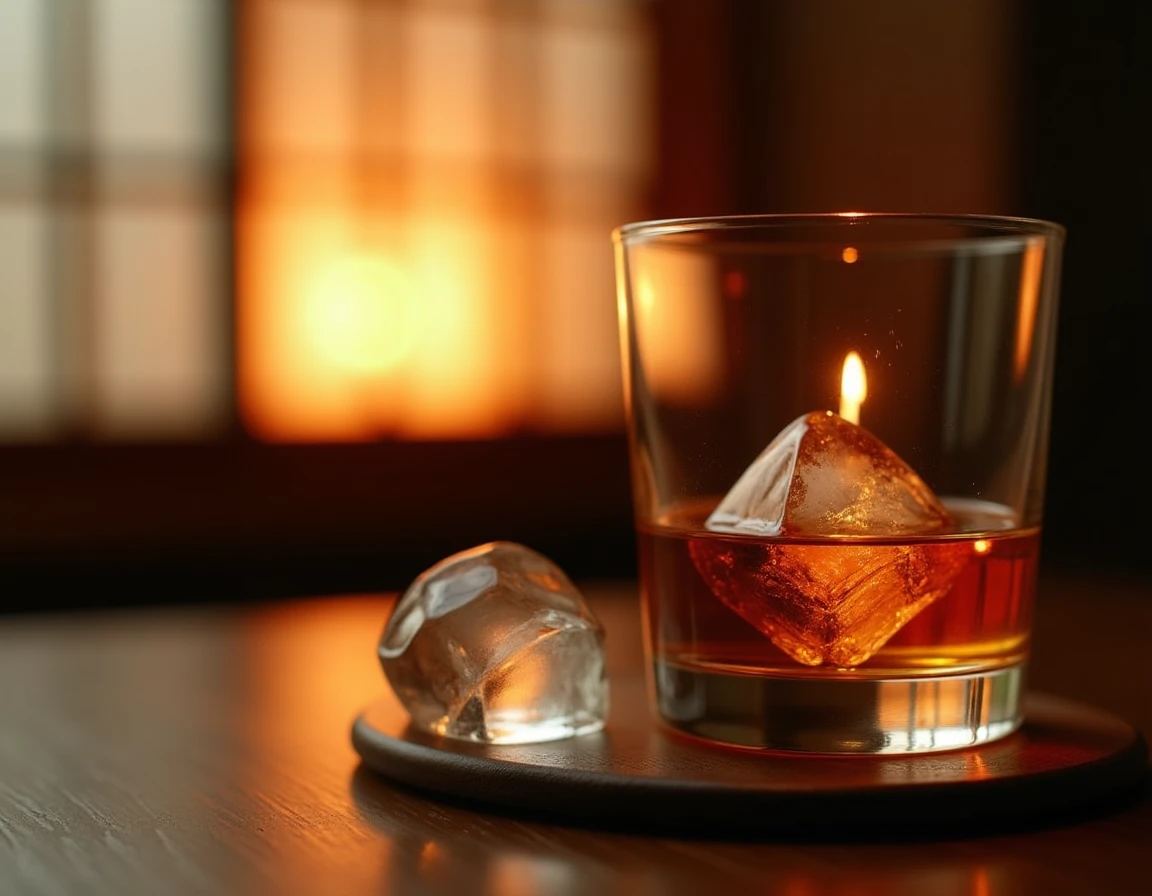
- It is recommended to drink it neat or with a large ice cube in a Glencairn or tulip glass. Hibiki's complex nose and palate profile is also open to the addition of water; a few drops can sometimes reveal deeper aromatic layers.
Related
The Story of Laphroaig: Smoke, Peat, and the Scent of the Sea on Islay
Born in 1815 on one of Scotland's most unforgiving islands, Laphroaig embodies a character distilled from ancient peat bogs and the breath of the Atlantic. Those who love it become fanatics. Those who don't will never try it again. Those who fall somewhere between are exceedingly rare.